
Digital Workflow
5 Must-Know Browser Security Settings

In today’s digital world, browsers are our gateway to the internet. However, without proper security settings, they can also be an entry point for cyber threats. To safeguard your personal information and browsing experience, here are five must-know browser security settings you should enable.
1. Enable HTTPS-Only Mode
HTTPS (HyperText Transfer Protocol Secure) ensures encrypted communication between your browser and the website, protecting you from hackers intercepting data. Most modern browsers offer an HTTPS-Only Mode, which forces websites to load securely.
How to Enable
- Google Chrome: Go to Settings > Privacy and Security > Security > Turn on “Always use secure connections.”
- Mozilla Firefox: Settings > Privacy & Security > Enable “HTTPS-Only Mode.”
- Microsoft Edge: Settings > Privacy, Search, and Services > Security > Enable “Always use secure connections.”
2. Block Third-Party Cookies
Third-party cookies track your online activity and can be exploited for targeted ads and data theft. Blocking them enhances privacy.
How to Enable
- Google Chrome: Settings > Privacy and Security > Cookies and other site data > Block third-party cookies.
- Mozilla Firefox: Preferences > Privacy & Security > Enhanced Tracking Protection > Strict Mode.
- Microsoft Edge: Settings > Site Permissions > Cookies and site data > Block third-party cookies.
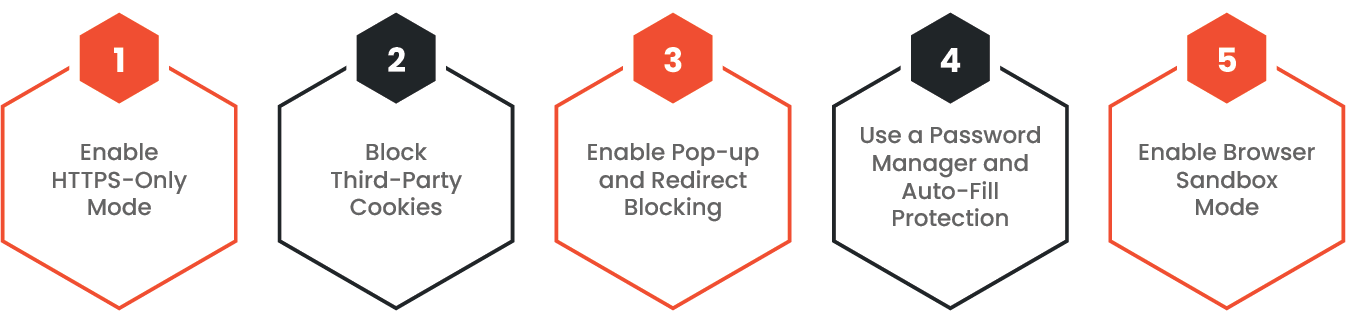
3. Enable Pop-up and Redirect Blocking
Pop-ups and redirects can be used for phishing attacks and malware distribution. Enabling pop-up blockers ensures a safer browsing experience.
How to Enable
- Google Chrome: Settings > Privacy and Security > Site Settings > Pop-ups and redirects > Block.
- Mozilla Firefox: Preferences > Privacy & Security > Block pop-up windows.
- Microsoft Edge: Settings > Cookies and Site Permissions > Block pop-ups and redirects.
4. Use a Password Manager and Auto-Fill Protection
Most browsers now offer built-in password managers, ensuring secure storage of passwords while preventing autofill attacks.
How to Enable
- Chrome & Edge: Settings > Passwords > Enable Auto-fill Protection.
- Firefox: Settings > Privacy & Security > Logins and Passwords > Use a Master Password.
5. Enable Browser Sandbox Mode
Sandboxing isolates browser processes, preventing malicious sites from accessing system files. It is usually enabled by default in modern browsers, but double-checking never hurts.
Bonus Tip: Regularly Clear Cache & Cookies
Old cache files can store sensitive information, making them a potential security risk. Regularly clear your cache and cookies in browser settings under “Privacy and Security.”
By configuring these settings, you can significantly enhance your browser’s security and protect yourself from cyber threats.