
SEO
SEO Beyond Keywords: How Formatting & File Optimization Improve Rankings
When discussing SEO, most people focus on keywords, backlinks, and meta descriptions, but formatting and file
optimization also play a crucial role in boosting search rankings.
Google prioritizes websites that are
well-structured, fast-loading, and user-friendly. If your site has unoptimized text, large images, or bulky PDFs, it
could be hurting your rankings without you realizing it.
In this guide, we’ll explore how proper word count,
case formatting, image optimization (SVG/WebP), and PDF compression impact SEO and how to use them to your
advantage.
1. Word Count: Why the Right Length Matters for SEO
Google ranks content that provides value. But how long should your content be?
- Blog posts (1,500–2,500 words): rank higher because they provide in-depth insights.
- Product descriptions (150–300 words): should be clear and concise.
- Landing pages (500–800 words): need to balance detail with readability.
- Meta title (50-60 characters) & meta description (150-160 characters): should be optimized for search visibility.
Pro Tip: Avoid thin content (too short with little value) and fluff (overly long with unnecessary details). A well-balanced word count helps improve engagement and rankings.
Use a word counter tool to ensure your content meets SEO best practices.
2. Case Conversion: How Formatting Affects SEO & Readability
Poorly formatted text can reduce readability and cause visitors to leave your site quickly, which increases your bounce rate (a negative SEO factor).
- Title Case improves headings and blog titles.
- Sentence case makes body text easier to read.
- UPPERCASE & lowercase should be used sparingly for emphasis.
Pro Tip: A properly formatted page keeps users engaged, reducing bounce rates and increasing time spent on your site—both crucial for SEO.
Use a case converter tool to keep your content clean and structured.
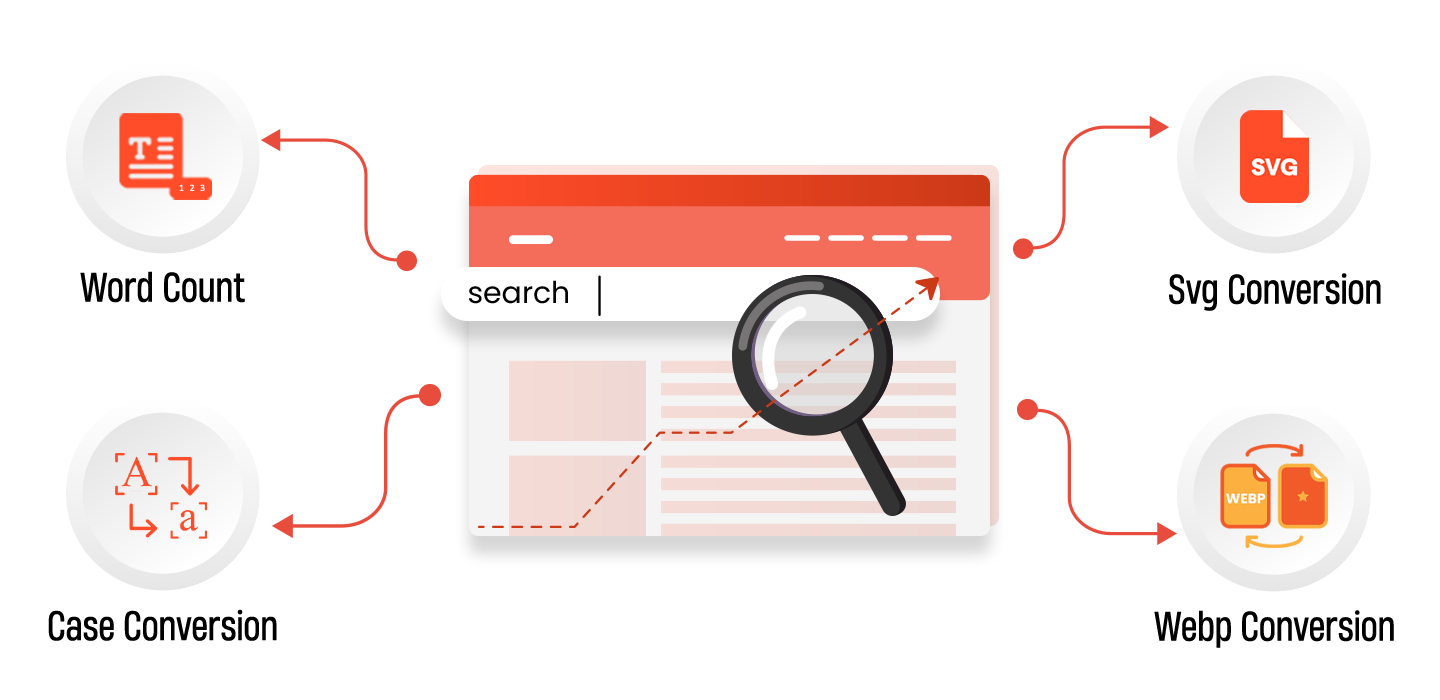
3. Image Optimization: Why SVG Conversion & WebP Conversion Improve Rankings
Google ranks fast websites higher, and large image files are one of the biggest reasons for slow pages.
- SVG (Scalable Vector Graphics): Best for logos, icons, and graphics, maintains sharpness without increasing file size.
- WebP (Next-gen format): Reduces file size without losing quality, loads faster than PNG or JPEG.
Pro Tip: Optimized images improve Google Core Web Vitals, leading to better user experience and rankings.
Use our SVG Conversion or WebP Conversion for better performance.
4. PDF Compression: Reduce File Size, Improve Load Time
Many websites host downloadable PDFs for brochures, guides, and whitepapers. However, large PDFs slow down websites, leading to higher bounce rates and lower rankings.
How PDF Compression Helps SEO:
- Reduces file size while maintaining quality.
- Speeds up mobile loading, which is crucial for Google’s mobile-first indexing.
- Enhances accessibility and user experience, leading to better engagement.
Pro Tip: If you host PDFs on your site, make sure they are compressed to avoid slow-loading pages.
Use a PDF compressor to make your PDFs SEO-friendly.
Final Thoughts
SEO is more than just keywords and backlinks—proper formatting and file optimization can give your site an edge in search rankings. By optimizing word count, case formatting, images, and PDFs, you can improve readability, page speed, and user engagement—all of which contribute to better SEO performance.
Want to optimize your website for SEO? Try these free tools on A2Z Converter!